
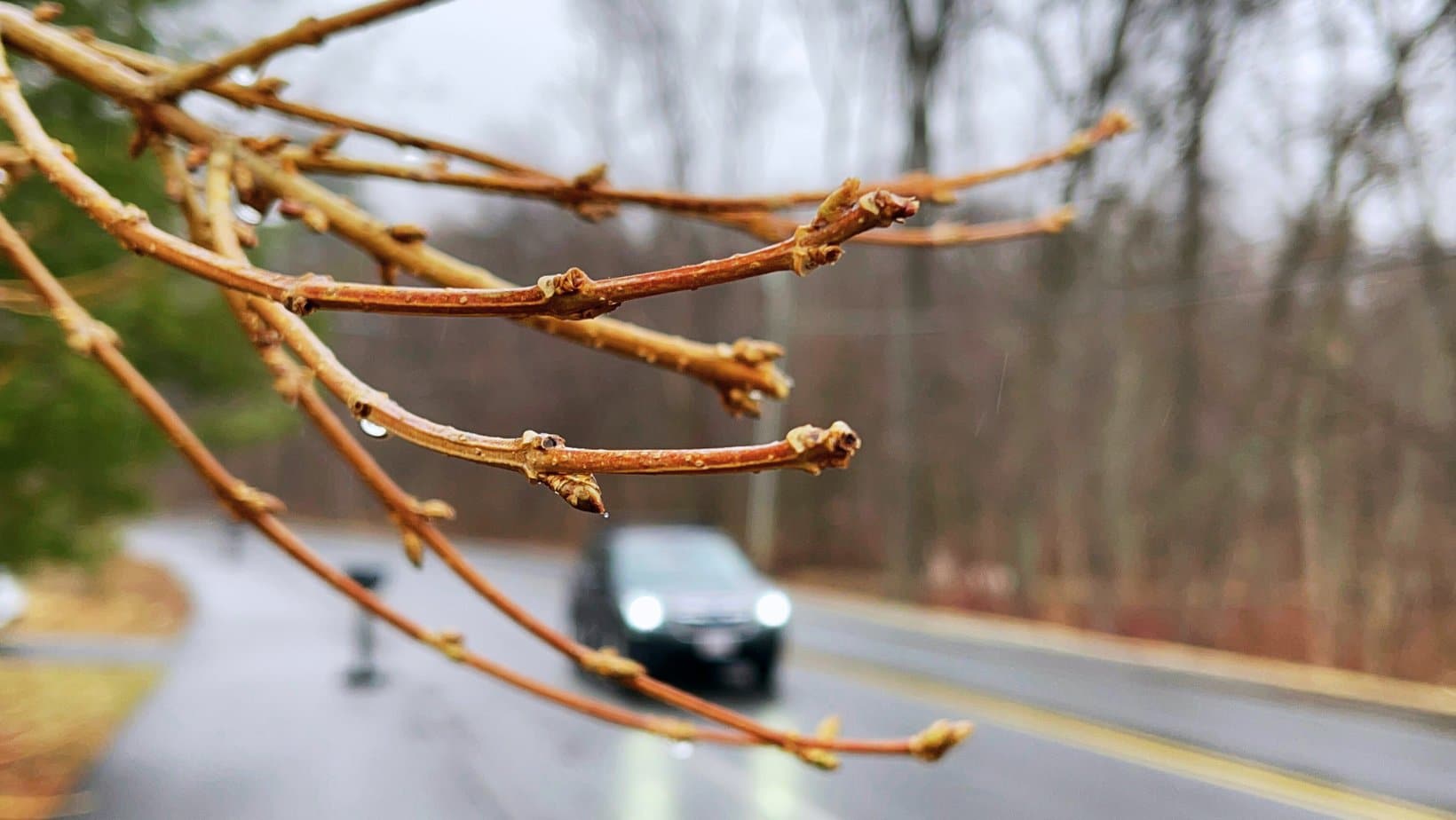
I went for a walk this morning, and the softest drizzle was falling.
Almost like a gentle spray of mist. It was overcast, but warm.
Spring officially began today, March 20th, 2025.
While March in Amherst can be unpredictable, with snow one day and sun the next, days like this hint at the shift toward spring. The average high temperature for mid-March in the Pioneer Valley is in the mid-40s, but sunny afternoons can feel much warmer, especially after a long winter.
Many locals take advantage of the first true sunny days to get outside; walking the Norwottuck Rail Trail or one of the many trails in the area, prepping garden beds, or just soaking in the light.
Learn more about the seasons in Western MA
Want to track the changing seasons more closely? The Hitchcock Center for the Environment offers seasonal nature walks and resources for observing local phenology, the study of seasonal changes in plants and animals. They also host a Phenology Study Club for those interested in documenting and understanding these changes.
Check out this April event at the Hitchcock Center on the Association of Nature Center Administrators website.
Additionally, the UMass Extension provides the “Landscape Message,” a newsletter that compiles environmental and phenological data across Massachusetts to aid in monitoring plant and pest development.
Both organizations offer valuable insights into the natural rhythms of our region, helping residents connect more deeply with the environment around them.
And what is Phenology?
Phenology is the study of seasonal timing in the natural world. It looks at when things happen each year; like when trees leaf out, flowers bloom, birds migrate, or animals hibernate.
These patterns are closely tied to climate and daylight, making phenology a useful way to track how nature responds to changes in the environment. In Amherst, you might notice these cues while walking through the woods, tending your garden, or just looking out the window.
Organizations like the Hitchcock Center encourage people to observe and record these signs, helping build a better picture of our region’s natural rhythms.
You can learn more about phenology on the USA National Phenology website.
PHOTO: FungaiFoto


