
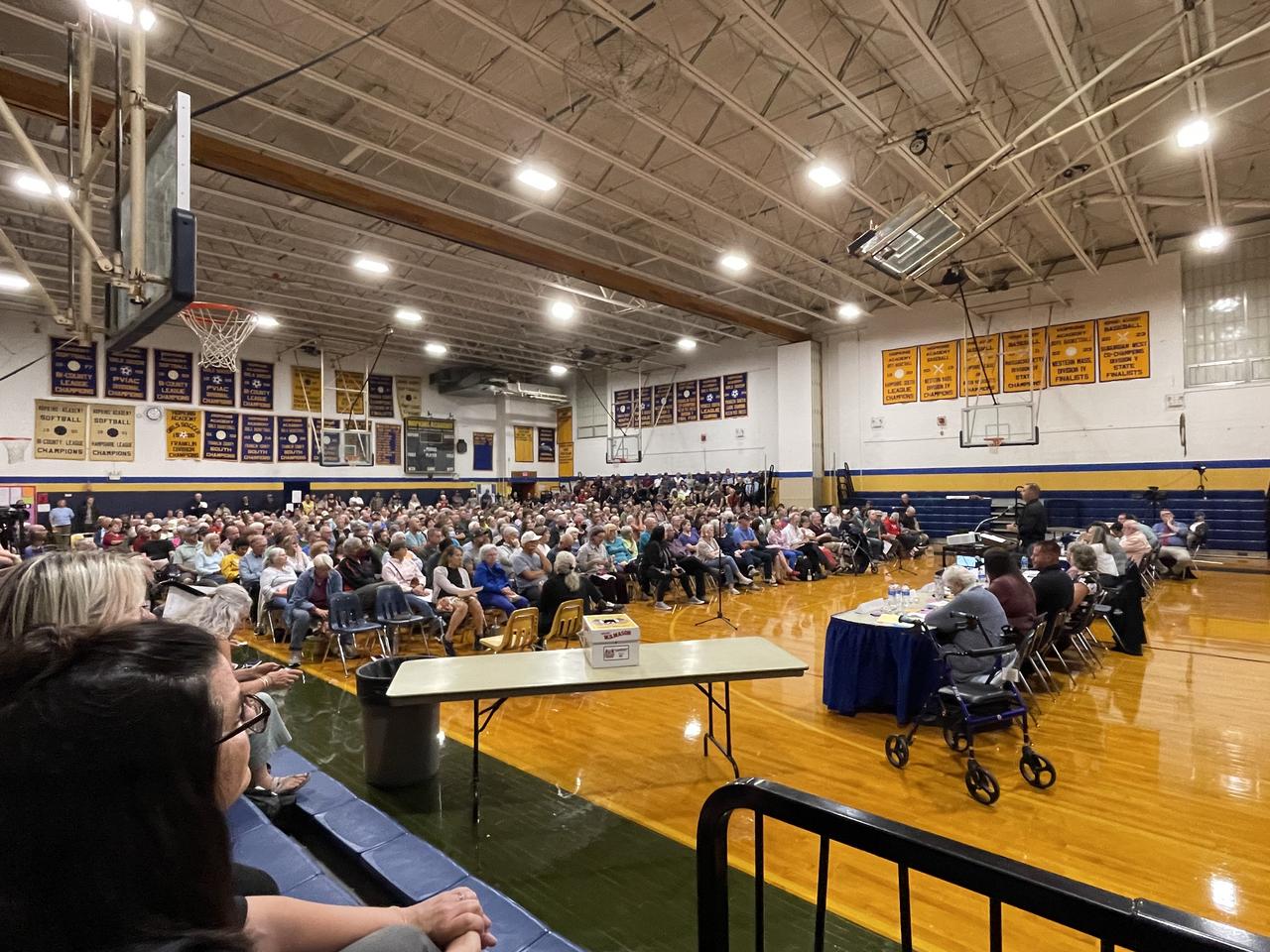
Over 600 Hadley residents attended the Proposition 2.5 Override Special Town Meeting held at Hopkins Academy on September 9, 2025.
By the end of the evening, both were rejected: a $2.25 million general override for town and school operations failed 344–250, and a $300,000 capital override fell 278–229.
But, that’s not the end of the story. The issue still has to go to ballot – and so might still turn into a yes. Once we make sense of it all, we’ll let you know.
The meeting stretched for hours as residents spoke passionately about the town’s financial future. Concerns about rising expenses, new hires, and permanent tax increases ran through much of the discussion.
“We are in the perfect storm of cost increases,” one official said, noting how expenses from insurance to equipment have risen sharply, just as households have seen groceries soar in price.
Health insurance premiums alone climbed at double-digit rates twice in one year, consuming nearly all of the town’s new revenue growth.
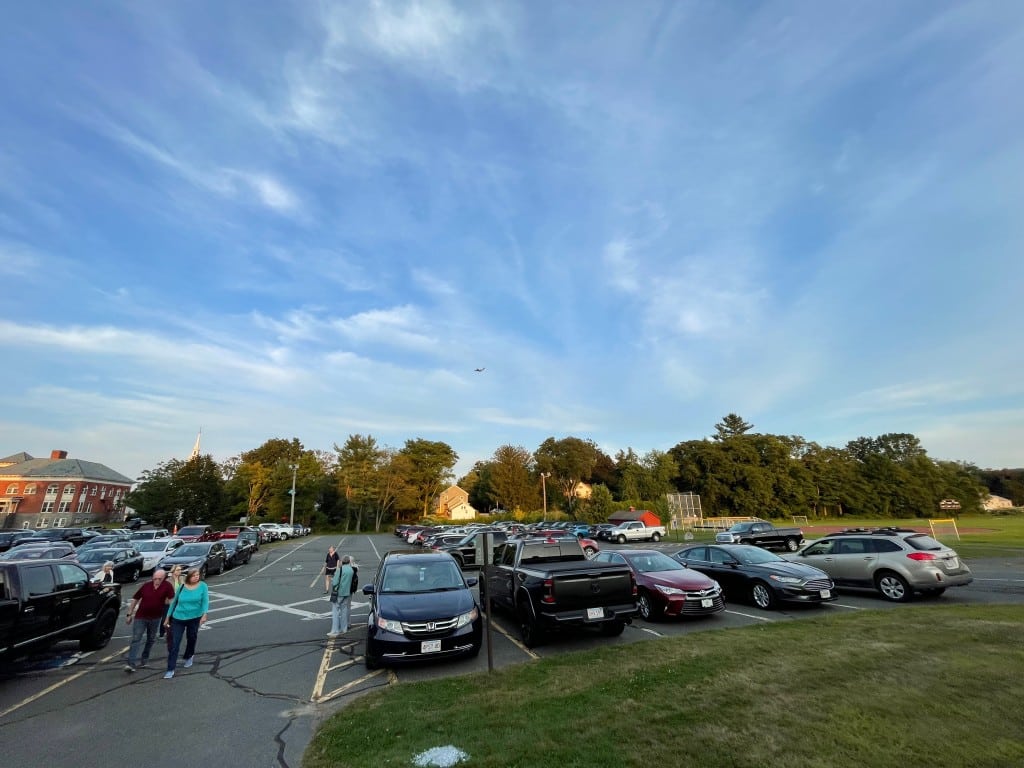
Select Board members stressed that they had worked carefully on the budget and pushed back against claims that the override was a “fait accompli.”
They emphasized that the budget book was not fixed, but subject to changes, reductions, and scrutiny by elected officials.
Still, some residents questioned the town’s financial management, pointing to years of hiring even during the pandemic when revenues were uncertain. In seven years, the town added 22 full-time employees, one resident noted, bringing long-term obligations for salaries, health insurance, and pensions.
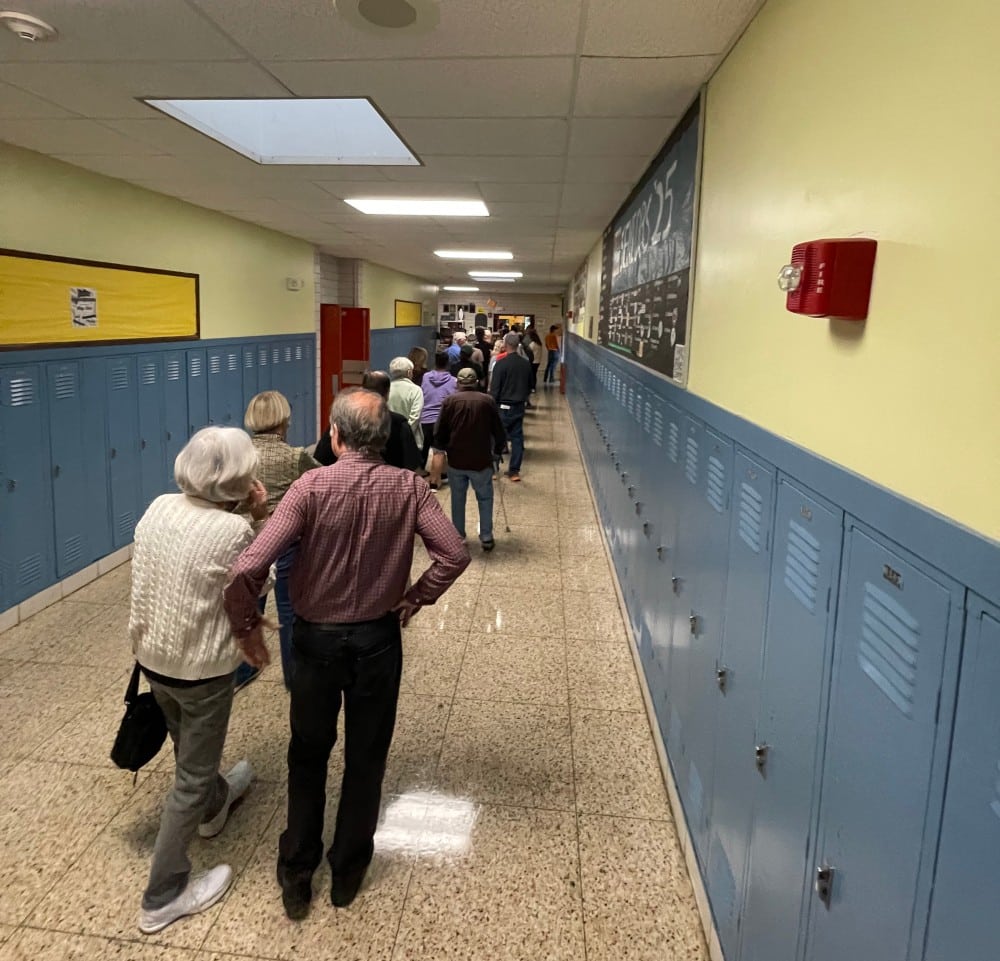
Schools were also drawn into the debate. A question arose about why the town was not using more of its $2 million in school choice funds to offset teacher salaries and insurance costs.
Anne McKenzie, Hadley Public Schools Superintendent responded that $1.6 million of those funds were already being used to support the operating budget, and that recent increases to the school budget had averaged just 1.6 percent per year.
Despite the Select Board’s assurances that they were planning ahead, including preparing for a possible increase in the local meals and rooms tax, voters were not persuaded. Calls to separate out funding for the fire department also did not change the final outcome.
In the end, residents sided with caution. As one longtime participant summarized, the town needed to ask a harder question before making commitments: “Before we hire somebody, how are we going to pay for it?”
PHOTOS: FungaiFoto for Amherst Now


